Cold Exposure Therapy: Ice Baths Beyond the Hype

You’ve seen the clips. Athletes climbing into ice-filled tubs, exhaling clouds of visible breath, faces contorted somewhere between determination and regret. Cold exposure therapy has exploded beyond professional sports into mainstream wellness culture. But strip away the social media theatrics, and what’s actually happening in your body? More importantly, should you be doing this?
The short answer: probably yes, but not the way most people approach it.
What Cold Exposure Actually Does to Your Body
When you submerge yourself in cold water, your body launches an immediate survival response. Blood vessels near your skin constrict rapidly, shunting blood toward your vital organs. Your heart rate spikes. Stress hormones flood your system-norepinephrine can increase by 200-300% within minutes.
This sounds alarming - it’s supposed to be.
Your body interprets cold immersion as a threat, and that triggered stress response is precisely what creates the potential benefits. Think of it as controlled hormetic stress: a manageable challenge that forces adaptation.
Research published in the European Journal of Applied Physiology found that regular cold exposure increases brown fat activity. Brown fat burns calories to generate heat, which may support metabolic health over time. A 2022 study in Cell Metabolism demonstrated that cold exposure activates specific proteins that reduce inflammation markers.
But here’s what the viral videos don’t show you: these benefits require consistency and proper technique. A single dramatic plunge accomplishes little beyond a temporary dopamine spike.
Getting Started: A Practical Protocol
Forget the extreme approaches you’ve seen online. Effective cold exposure follows a progression.
Step 1: Start With Cold Showers
End your regular shower with 30 seconds of the coldest water you can tolerate. This isn’t about suffering-it’s about adaptation. Your goal is controlled breathing, not gasping and thrashing.
Why this matters: You’re training your nervous system to handle cold stress without panic. The vagus nerve activation that occurs during controlled cold exposure improves over time, building what researchers call “cold habituation.
Do this daily for two weeks before considering anything more intense.
Step 2: Extend Your Duration Gradually
Once 30 seconds feels manageable (not comfortable-manageable), add 15 seconds per week. Work toward 2-3 minutes of cold exposure. Most studies showing measurable benefits use protocols in this range.
Troubleshooting tip: If you’re hyperventilating or unable to control your breathing after 30 seconds, the water is too cold or you’re progressing too fast. Back off and build more gradually.
Step 3: Transition to Full Immersion
After 4-6 weeks of cold showers, you can experiment with ice baths or cold plunges. Fill a bathtub with cold tap water first-no ice. Submerge up to your shoulders for 2 minutes.
The temperature matters less than you’d think. Water between 50-59°F (10-15°C) triggers most of the physiological responses you’re after. Those 34°F ice baths look impressive but offer diminishing returns while dramatically increasing risk.
Step 4: Establish Your Maintenance Protocol
11 minutes of total cold exposure per week, spread across 2-4 sessions, appears to be a reasonable target based on current research. Dr. Andrew Huberman’s analysis of the literature suggests this threshold for meaningful adaptation.
You don’t need daily ice baths. Three 3-4 minute sessions weekly will do more than sporadic extreme plunges.
Timing Cold Exposure Around Your Training
Here’s where most fitness enthusiasts get it wrong.
Cold exposure blunts the inflammatory response. That’s generally good-except immediately after strength training. The inflammation following resistance exercise signals your muscles to adapt and grow. Suppress it too aggressively, and you may compromise your gains.
A 2015 study in the Journal of Physiology found that cold water immersion after strength training reduced muscle protein synthesis and blunted hypertrophy over 12 weeks.
The fix: Separate cold exposure from strength training by at least 4 hours. Better yet, do your cold sessions on rest days or after endurance work, where the anti-inflammatory effects support recovery rather than hindering adaptation.
For pure recovery purposes-say, after a demanding competition or unusually intense session-cold immersion within 30 minutes can reduce muscle soreness. Just understand the tradeoff.
Who Should Avoid Cold Exposure
Not everyone should be doing this.
If you have cardiovascular disease, cold immersion causes significant cardiac stress. The rapid vasoconstriction and blood pressure spikes can be dangerous. Get clearance from a cardiologist before experimenting.
Raynaud’s disease makes cold exposure potentially harmful to your extremities. The exaggerated vascular response can cause lasting damage.
Pregnancy is another contraindication. The stress hormones released during cold immersion aren’t worth the risk.
And honestly? If you hate it, the stress may outweigh the benefits. Chronic psychological distress has its own negative health effects. Cold exposure should challenge you, not traumatize you.
Separating Science From Hype
Let’s be direct about what the evidence does and doesn’t support.
Reasonably well-supported claims:
- Reduced muscle soreness after intense exercise
- Improved mood and alertness (dopamine and norepinephrine effects)
- Potential metabolic benefits through brown fat activation
- Decreased inflammation markers in blood tests
Overhyped or poorly supported claims:
- Significant fat loss from cold exposure alone
- Immune system “boosting” (the studies are mixed and methodologically weak)
- Longevity benefits (plausible but unproven in humans)
- Cure for anxiety or depression (it’s a tool, not a treatment)
The wellness industry has a habit of taking preliminary findings and packaging them as certainties. Cold exposure shows genuine promise for specific applications. It’s not a miracle intervention.
Making It Sustainable
The biggest predictor of whether cold exposure will benefit you? Whether you actually do it consistently.
Here’s what works for building the habit:
**Make it convenient. ** A cold plunge in your backyard gets used more than a cryo chamber across town. Cold showers require zero equipment.
**Pair it with something enjoyable. ** Many practitioners follow cold exposure with hot coffee or tea. The contrast feels incredible, and the ritual makes the practice sticky.
**Track your tolerance. ** Note water temperature and duration. Watching your capacity increase provides motivation that vague wellness promises can’t match.
**Find your why. ** Are you doing this for recovery? Mental clarity - discipline training? Different goals require different protocols - clarity keeps you showing up.
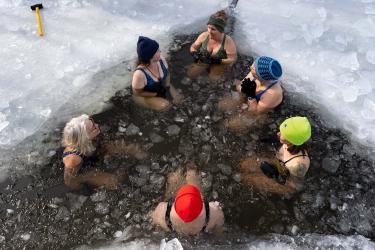
One more thing: the community aspect of cold exposure-those group plunges and online challenges-can be motivating but also dangerous. Don’t let social pressure push you into water colder or longer than you can safely handle. Your nervous system doesn’t care about your Instagram story.
The Bottom Line
Cold exposure therapy offers legitimate benefits when practiced consistently and progressively. Start with cold showers, build tolerance over weeks, and eventually work toward 11+ minutes of weekly cold immersion at reasonable temperatures.
Time your sessions intelligently around training. Understand the contraindications - stay skeptical of extreme claims.
The hype around ice baths isn’t entirely unfounded-but the reality is both more nuanced and more accessible than social media suggests. You don’t need expensive equipment or dramatic suffering. You need 30 seconds of cold water at the end of your shower, repeated until it becomes unremarkable.
That’s where the benefits actually begin.