GLP-1 Medications and Muscle Preservation Strategies
GLP-1 receptor agonists like Ozempic, Wegovy, and Mounjaro have changed how we approach weight loss. These medications work remarkably well-patients often lose 15-20% of their body weight. But here’s the problem nobody talks about enough: a significant portion of that weight comes from muscle, not just fat.
Studies show that up to 40% of weight lost on GLP-1 medications can be lean body mass. That’s alarming. Muscle is more than for aesthetics. It drives your metabolism, protects your joints, maintains bone density, and keeps you functional as you age.
So what do you do - you fight back with strategy.
Why Muscle Loss Happens on GLP-1 Medications
Understanding the mechanism helps you combat it. GLP-1 drugs suppress appetite dramatically. Most users eat 20-40% fewer calories than before. Your body doesn’t distinguish between fat and muscle when faced with a caloric deficit-it burns whatever’s available.
Add another factor: reduced protein intake. When you’re eating less overall, you’re almost eating less protein. And without adequate protein, your body can’t maintain muscle tissue during weight loss.
There’s also the activity problem. Some GLP-1 users report fatigue, especially in the first few months. Less energy means less movement. Less movement means less muscle stimulus. Your body follows a simple rule: use it or lose it.
Step 1: Calculate and Hit Your Protein Target
This is non-negotiable. Your protein needs actually increase when you’re losing weight, not decrease.
Aim for 0. 7-1 gram of protein per pound of your goal body weight daily. If you currently weigh 200 pounds and want to reach 160, target 112-160 grams of protein every day.
That might sound like a lot when your appetite is suppressed. Here’s how to make it work:
**Prioritize protein at every meal. ** Eat your protein source first, before vegetables or carbs. When you’re full faster, you want those calories to count.
**Use protein supplements strategically. ** A 30-gram protein shake takes up minimal stomach space. Whey isolate, casein, or plant-based options all work. Drink one between meals or after workouts.
**Choose protein-dense foods. ** Greek yogurt (17g per cup), cottage cheese (28g per cup), chicken breast (31g per 4oz), and egg whites (26g per cup) deliver maximum protein with minimal volume.
**Track for at least two weeks. ** Use an app like MacroFactor or MyFitnessPal. Most people overestimate their protein intake by 20-30% until they actually measure.
Step 2: use Progressive Resistance Training
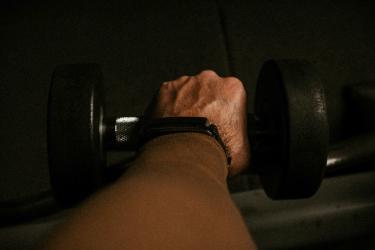
Cardio won’t save your muscle - strength training will.
Your muscles need a reason to stick around. Progressive resistance training tells your body: “Hey, I need this tissue. Don’t burn it for fuel.
**Train each muscle group twice per week. ** Research consistently shows this frequency optimizes muscle retention. A simple upper/lower split four days per week works well.
**Focus on compound movements. ** Squats, deadlifts, bench press, rows, and overhead press recruit multiple muscle groups simultaneously. You get more stimulus in less time-important when energy is limited.
**Progressively increase the challenge. ** Add weight, reps, or sets over time. If you lifted the same weights for the same reps month after month, your body has no reason to maintain extra muscle.
Sample Weekly Structure:
- Monday: Lower body (squats, Romanian deadlifts, leg press)
- Tuesday: Upper body (bench press, rows, shoulder press)
- Thursday: Lower body (lunges, hip thrusts, leg curls)
- Friday: Upper body (incline press, pull-ups, lateral raises)
Three sets of 8-12 reps per exercise works for most people. Rest 2-3 minutes between sets of compound lifts.
Step 3: Time Your Nutrition Around Training
When you eat matters, especially with reduced overall intake.
**Consume 25-40 grams of protein within two hours of training. ** this gives amino acids when your muscles are most receptive to repair and growth signals.
**Don’t train completely fasted. ** If you work out in the morning, have at least a protein shake beforehand. Training on empty while in a caloric deficit accelerates muscle breakdown.
**Spread protein throughout the day. ** Your body can only use so much protein at once for muscle synthesis-roughly 25-40 grams depending on your size. Four meals with 30+ grams each beats two meals with 60 grams.
Step 4: Manage Your Rate of Weight Loss
Faster isn’t better when muscle preservation is the goal.
Losing more than 1% of body weight per week significantly increases muscle loss risk. For a 200-pound person, that’s 2 pounds maximum per week.
GLP-1 medications can push weight loss faster than this, especially initially. You have options:
**Discuss dosing with your prescriber. ** Some patients do better on lower doses that produce slower, steadier weight loss with less muscle sacrifice.
**Add strategic calorie bumps. ** If you’re losing faster than 1% weekly, increase calories slightly-preferably from protein and carbohydrates around workouts.
**Take diet breaks. ** Every 8-12 weeks, eating at maintenance calories for 1-2 weeks can help preserve metabolic rate and muscle mass. Your prescriber can help you plan these.
Step 5: Monitor Your Progress Beyond the Scale
The scale lies. It can’t tell you what kind of weight you’re losing.
**Get a DEXA scan every 3-4 months. ** This imaging test shows exactly how much fat versus lean mass you carry. It costs $50-150 at most imaging centers and provides data you can actually act on.
**Track strength benchmarks. ** If your squat and bench press numbers hold steady while you lose weight, you’re likely preserving muscle. Declining strength suggests muscle loss.
**Take progress photos and measurements. ** Waist circumference decreasing while arm and thigh measurements hold? Good sign - everything shrinking proportionally? You’re probably losing muscle too.
**Consider bioelectrical impedance devices. ** While less accurate than DEXA, scales like the Withings Body Comp or InBody devices track trends in lean mass over time.
Troubleshooting Common Problems
**Problem: You can’t stomach enough protein. ** Solution: Liquid proteins digest easier than solid food for many GLP-1 users. Try bone broth (10g per cup), protein coffee, or clear whey isolate mixed in water. Spread intake across 5-6 small doses rather than 3-4 larger ones.
**Problem: You’re too tired to train. ** Solution: Time workouts when your energy peaks-often morning or mid-afternoon for GLP-1 users. Reduce workout volume temporarily but maintain intensity. Two solid 30-minute sessions beat four skipped 60-minute sessions.
**Problem: You’re losing strength despite training. ** Solution: You’re probably under-eating protein or losing weight too fast. Increase protein intake by 20g daily. If weight loss exceeds 1% per week, add 200-300 calories from protein and carbs around workouts.
**Problem: Nausea prevents eating around workouts. ** Solution: Train further from your injection day when side effects typically peak. Use easily-digested protein sources like whey isolate or Greek yogurt rather than meat.
What Results to Expect
With proper protein intake and resistance training, you can shift the ratio dramatically. Instead of losing 40% lean mass, studies show you can reduce this to 10-15%-meaning you lose primarily fat.
Some patients actually gain muscle while losing fat on GLP-1 medications. This body recomposition is possible, especially for those new to strength training.
The timeline matters too. Initial weight loss (first 3 months) tends to include more lean mass. As you adapt and use these strategies, the ratio improves.
The Bottom Line
GLP-1 medications are powerful tools - they’re not magic solutions. The difference between losing 50 pounds of mostly fat versus 50 pounds of mixed fat and muscle is entirely in your hands.
Prioritize protein like your metabolism depends on it-because it does. Train with resistance consistently. Monitor your body composition, not just your weight. Work with your prescriber to find a sustainable rate of loss.
The goal is more than weighing less. It’s being healthier, stronger, and more functional at your new weight. That requires keeping the muscle you’ve built while shedding the fat you don’t need.