Brazilian Jiu-Jitsu Fitness: Full Body Workout Beyond the Mat

You’ve seen UFC fighters grappling on the ground, twisting into impossible positions while maintaining complete control over their opponents. What you might not realize is. Brazilian Jiu-Jitsu (BJJ) offers one of the most effective full-body workouts available-and you don’t need to compete or even spar to reap the benefits.
BJJ builds functional strength that transfers directly to daily life. Pushing, pulling, rotating, and stabilizing under resistance creates a physique that’s genuinely useful, not just aesthetically impressive. A 155-pound purple belt can feel immovable when they’ve established a solid base. That’s not magic - it’s trained strength.
Why BJJ Training Differs From Traditional Gym Workouts
Most gym routines isolate muscle groups. Chest day - leg day. Back and biceps - bJJ doesn’t work that way.
During a single five-minute roll (that’s what practitioners call sparring), you’ll use your legs to control distance, your core to maintain posture, your arms to grip. Frame, and your back to execute sweeps. Everything works together because your opponent is actively resisting and creating unpredictable challenges.
This constant adaptation builds what exercise scientists call “reactive strength”-the ability to produce force quickly in response to external stimuli. You can’t replicate this on a leg press machine.
The metabolic demands are intense too. Research published in the Journal of Strength. Conditioning Research found that BJJ training sessions produce heart rate responses comparable to high-intensity interval training, averaging 85-90% of maximum heart rate during live rolling.
Building Your Off-Mat BJJ Fitness Routine
Here’s the deal: mat time is irreplaceable for skill development, but supplemental training accelerates your progress and reduces injury risk. These exercises target the specific movement patterns and energy systems BJJ demands.
Step 1: Develop Your Grip Endurance
Grip strength separates beginners from experienced grapplers. When your hands give out, your entire game collapses.
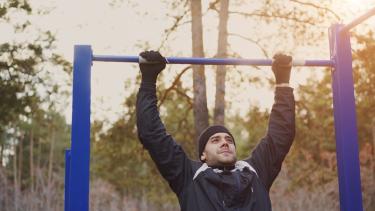
Dead Hangs Hang from a pull-up bar with straight arms for 30-60 seconds. Once that becomes manageable, try hanging from a towel draped over the bar-this mimics gi grips more accurately. Aim for three sets, resting 90 seconds between attempts.
Farmer’s Carries Grab heavy dumbbells or kettlebells (start with 50% of your bodyweight total) and walk 40-50 meters. Keep your shoulders packed down and back straight. Your forearms should burn by the end. Three rounds works well.
Gi Pull-Ups Throw your gi jacket over a pull-up bar and grip the lapels. Pull yourself up. These are brutally hard at first-even strong people struggle with sets of 5. That difficulty is precisely why they’re effective.
Step 2: Build Rotational Core Power
Forget crunches. BJJ requires anti-rotation stability and explosive rotational power for sweeps and escapes.
Pallof Press Attach a resistance band to a fixed point at chest height. Stand perpendicular to the anchor, holding the band at your sternum. Press straight out and hold for 3 seconds, resisting the band’s pull to rotate you. Ten reps each side, three sets.
Medicine Ball Rotational Throws Stand sideways to a wall, 3-4 feet away. Rotate explosively from your hips (not just your arms) and throw a medicine ball into the wall. Catch and repeat. This mirrors the hip mechanics of sweeps like the scissor sweep or hip bump. Eight throws per side, three sets.
Turkish Get-Ups This single exercise trains the entire movement pattern of standing up from your back while controlling weight overhead-essentially what you’re doing when an opponent is pressuring you. Start light (15-20 pounds) and focus on smooth transitions. Five per side.
Step 3: Develop Hip Mobility and Strength
Stiff hips limit your guard game and increase injury risk. Mobile, strong hips let you create angles and recover guard when passed.
90/90 Hip Switches Sit on the floor with both knees bent at 90 degrees, one leg in front (shin parallel to your chest) and one to the side. Rotate your legs to switch which is in front without using your hands. Fifteen switches, moving slowly and controlled.
Cossack Squats Stand with feet wide. Shift your weight to one side, bending that knee deeply while keeping the other leg straight. Your straight leg foot can rotate to point upward. Alternate sides. Ten per side builds both mobility and single-leg strength.
Hip Bridges with Pause Lie on your back, feet flat, knees bent. Drive through your heels to lift your hips, squeezing your glutes hard at the top. Hold for 3 seconds. This directly strengthens the bridge-a fundamental escape from bottom mount. Fifteen reps, three sets.
Step 4: Train Your Energy Systems
BJJ matches last 5-10 minutes of sustained effort with explosive bursts. Your conditioning should reflect this.
Tempo Intervals On a rower, assault bike, or while running: work at moderate intensity (you can speak in short sentences) for 4 minutes, then sprint hard for 1 minute. Repeat four times. This mimics the pacing of a competitive match where you’re constantly working but need to explode for submissions or escapes.
Tabata Finishers After your strength work, pick two exercises-burpees and sprawls work perfectly. Twenty seconds maximum effort, 10 seconds rest, alternating for 8 total rounds (4 minutes). You’ll finish gasping - that’s the point.
Sample Weekly Training Schedule
Balancing supplemental training with mat time requires planning. Here’s a framework that works for most recreational practitioners training BJJ 3-4 times per week:
Monday: BJJ class Tuesday: Grip + Core workout (Steps 1 and 2) - 35 minutes Wednesday: BJJ class Thursday: Hip mobility + Conditioning (Steps 3 and 4) - 40 minutes Friday: BJJ class Saturday: Light flow rolling or active recovery Sunday: Rest completely
Adjust based on your recovery. If you’re still sore from Tuesday’s workout on Wednesday’s mat session, reduce the volume or intensity of your supplemental training.
Common Mistakes to Avoid
**Training too heavy, too often. ** BJJ already stresses your joints and connective tissue. Chasing one-rep maxes in the gym while training hard on the mats is a recipe for injury. Moderate weights with controlled tempos protect your body.
**Neglecting recovery - ** Sleep 7-9 hours. Eat enough protein (0 - 7-1g per pound of bodyweight). Foam roll or stretch on rest days. These aren’t optional supplements to training-they’re when adaptation actually happens.
**Copying powerlifting or bodybuilding programs directly. ** Those programs assume the gym is your primary training stimulus. For you, the mat is. Your supplemental work should enhance your BJJ, not compete with it for recovery resources.
Tracking Your Progress
Numbers help, but they’re not the only metrics that matter.
On the mat, notice if you’re maintaining grips longer into rolls. Can you complete a full round without your forearms burning out? Are you recovering faster between rolls? These practical improvements indicate your conditioning is working.
Off the mat, track basic progressions: hang time increasing, weight on carries going up, reps on Turkish get-ups improving. But always prioritize how you feel during training over arbitrary strength benchmarks.
Getting Started This Week
Pick one element from each step and try it in your next training session. Don’t overhaul everything simultaneously.
Start with dead hangs after your next class-just three 30-second attempts. Add Pallof presses and hip bridges the following week. Build gradually. Consistency over months beats intensity over weeks every time.
BJJ rewards patience, both in technique development and physical preparation. The practitioners who train intelligently for years outlast those who burn hard for months and quit injured. Your supplemental training should support a long, sustainable journey on the mats-not derail it.