Building Core Strength Without Crunches
Your lower back aches after every ab session. Those crunches you’ve been grinding through? They might be doing more harm than good. Traditional crunches put repetitive stress on your spine, and for many people, they don’t even target the core muscles that matter most for real-world strength.
Good news: you can build a rock-solid core without doing a single crunch.
Why Crunches Aren’t the Answer
Crunches isolate the rectus abdominis-that “six-pack” muscle running down your front. But your core is so much more than that. It includes your obliques, transverse abdominis (the deep stabilizer wrapping around your midsection), erector spinae, and even your glutes and hip flexors.
but. Your core’s primary job isn’t to flex your spine repeatedly. It’s to resist movement and transfer force between your upper and lower body. When you pick up a heavy grocery bag, throw a ball, or simply walk, your core stabilizes. Crunches train the exact opposite movement pattern.
Spine specialist Dr. Stuart McGill’s research found that repeated spinal flexion (the motion in crunches) can damage spinal discs over time. His work showed that most people get better core training from anti-movement exercises-moves where you resist rotation, extension, or lateral bending.
The Anti-Movement Approach to Core Training
Think of your core as a cylinder that needs to stay rigid while forces try to move it. Train it that way.
Step 1: Master the Dead Bug
The dead bug looks deceptively simple. Lie on your back with arms reaching toward the ceiling and knees bent at 90 degrees. Press your lower back firmly into the floor-this is key. Now extend your opposite arm and leg slowly while maintaining that back position.
Why it works: This move trains your core to resist extension (arching) while your limbs move independently. It’s how your core functions during walking, running, and most athletic movements.
Start with 3 sets of 8 reps per side. If your lower back lifts off the floor, you’ve gone too far. Shorten the range of motion until you can maintain contact throughout.
Troubleshooting tip: Place a thin towel under your lower back. If you feel it bunch up or your back lift away, you’ve lost position.
Step 2: Build Plank Endurance (The Right Way)
Forget holding planks for five minutes. That’s an endurance test, not core training. Instead, focus on creating maximum tension for shorter periods.
Get into a forearm plank. Now actively try to pull your elbows toward your toes and your toes toward your elbows. Your body won’t move, but you’ll feel your entire core light up. Squeeze your glutes hard - breathe.
Hold for 10-15 seconds with maximum tension. Rest 5 seconds - repeat 5-8 times. This approach builds actual strength rather than just the ability to hang out in a position.
Progression: Once standard planks feel easy, try plank variations like body saws (shifting forward and backward on your forearms) or plank reaches (lifting one arm forward while maintaining hip position).
Step 3: Add Rotation Resistance
Pallof presses are your secret weapon here. You’ll need a cable machine or resistance band anchored at chest height.
Stand perpendicular to the anchor point, holding the cable or band at your chest. Step away until there’s tension. Press straight out in front of you and hold for 2-3 seconds. The resistance tries to rotate you toward the anchor-your job is to resist.
Do 3 sets of 10 reps per side. Keep your hips and shoulders square throughout.
Why this matters: Rotational stability protects your spine during daily activities like carrying a suitcase, playing with kids, or swinging a golf club. Most back injuries happen during rotation under load.
Step 4: Train Lateral Stability
Side planks target your obliques and quadratus lumborum-muscles that prevent your spine from collapsing sideways.
Stack your feet and lift your hips so your body forms a straight line. Don’t let your hips sag or pike up. Hold for 20-30 seconds per side.
Harder version: Lift your top leg while holding the side plank. Even harder: Add hip dips, lowering your hip toward the floor and lifting back up.
Step 5: Incorporate Loaded Carries
Want functional core strength - carry heavy things.
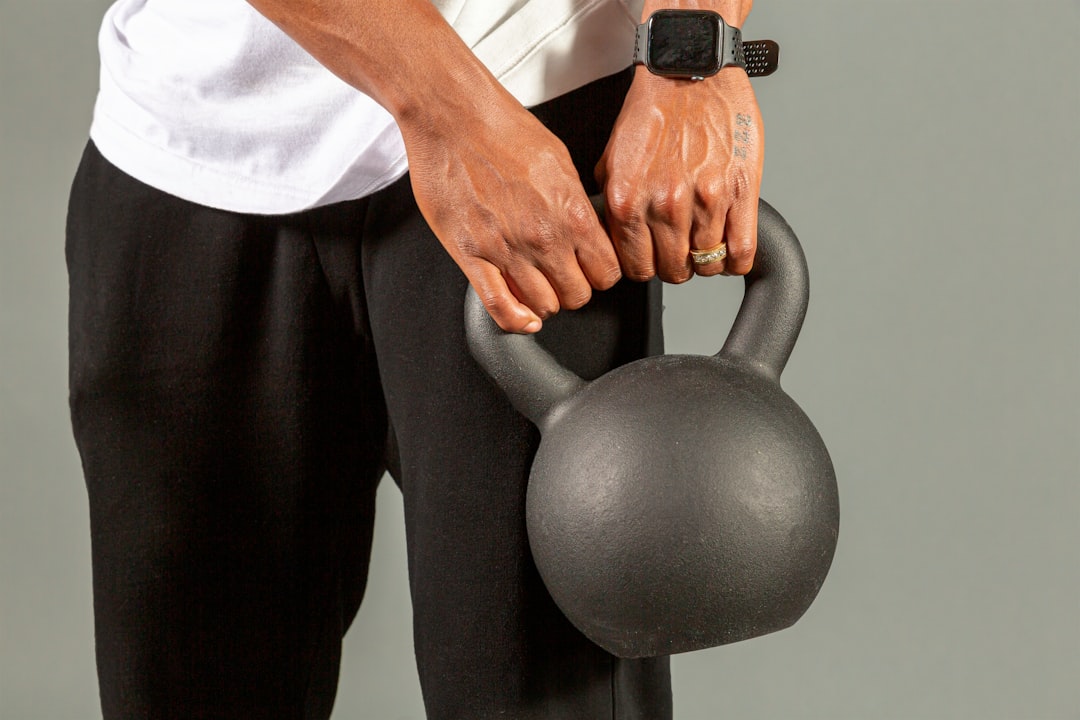
Farmer’s walks work every core muscle simultaneously. Grab heavy dumbbells or kettlebells and walk 40-50 meters. Keep your shoulders back, chest up, and resist the urge to lean.
Suitcase carries (one weight, one side) create an anti-lateral flexion challenge. Your core fights to keep you upright while the weight tries to pull you sideways. Do 3 sets of 40 meters per side.
These exercises transfer directly to real life. Carrying groceries, moving furniture, holding a squirming toddler-it’s all loaded carrying.
Sample Core Workout (No Crunches Needed)
Here’s a 15-minute routine you can do 3-4 times per week:
Circuit 1 (repeat twice):
- Dead bugs: 10 reps per side
- Pallof press: 10 reps per side
- Rest 45 seconds
Circuit 2 (repeat twice):
- High-tension planks: 10 seconds on, 5 seconds rest, 5 rounds
- Side plank: 20 seconds per side
- Rest 45 seconds
Finisher:
- Farmer’s walk: 3 sets of 40 meters, heavy as possible
Common Mistakes to Avoid
**Holding your breath. ** Your core and breathing are connected through the diaphragm. Learn to breathe while maintaining tension-it’s how your core works during actual activities.
**Going too fast. ** Core exercises should be slow and controlled. Momentum lets you cheat. A 3-second lower, 1-second pause, 3-second lift tempo works well for most exercises.
**Ignoring your back. ** Your erector spinae muscles are part of your core too. Bird dogs, supermans, and back extensions balance out all the anterior (front-focused) work.
**Training core daily. ** These are muscles like any others. They need recovery. Three to four sessions per week is plenty for most people.
The Bigger Picture
Strong compound lifts-squats, deadlifts, overhead presses, rows-train your core intensely as a stabilizer. If you’re doing these movements with good form and challenging weights, you’re already getting significant core work.
The dedicated core exercises in this guide fill gaps and address weaknesses. They’re supplements to a solid strength training program, not replacements for it.
One more thing: visible abs come from low body fat, not endless core exercises. You could have the strongest core in your gym and never see definition if your nutrition doesn’t support it. That’s not a reason to skip core training-it’s just a reality check about what these exercises will and won’t do.
Your core aims to stabilize, resist, and transfer force. Train it that way, and you’ll build strength that actually shows up in your daily life. Skip the crunches - your spine will thank you.