Cold Plunge Recovery: What Ice Baths Actually Do to Muscles
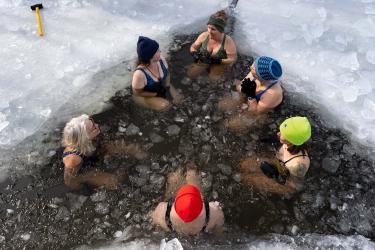
I’ve dunked myself into water cold enough to make a grown man yelp more times than I can count. And after eight years of personal training and experimenting with recovery methods on myself and my clients, I’ve got a pretty firm stance: cold plunges work, but not for the reasons most people think.
That’s my thesis. The ice bath isn’t some magical reset button for your muscles. It’s a stress tool. And how you use it - when, how long, how cold - matters way more than whether you do it at all.
Your Muscles Aren’t “Healing” in Cold Water
Here’s where I disagree with the mainstream fitness crowd. Most gym bros will tell you that an ice bath “flushes out lactic acid” or “repairs micro-tears faster.” Neither of those claims holds up well under scrutiny.
Lactic acid clears from your muscles within about an hour after exercise, with or without cold water. A 2012 Cochrane review of 17 studies found that cold water immersion did reduce delayed onset muscle soreness (DOMS) compared to passive recovery - but the effect was modest. We’re talking about a difference of roughly 1 point on a 10-point pain scale.
So what’s actually happening?
When you sit in water between 50-59°F (10-15°C), your blood vessels constrict. Hard. This reduces blood flow to your extremities and muscles. Once you get out, blood rushes back in - a process called reactive hyperemia. That influx can feel fantastic. But “feeling better” and “recovering faster” aren’t the same thing.
I tell my clients this: the cold plunge is like hitting the pause button on inflammation. Inflammation itself isn’t bad. It’s your body’s repair crew showing up to fix the damage from your workout. Blunting that response too aggressively, especially right after strength training, might actually slow down muscle adaptation.
A 2015 study in the Journal of Physiology showed that guys who took cold baths after resistance training for 12 weeks gained less muscle mass and strength than those who did active recovery. That finding changed how I program cold exposure for my clients.
When Cold Plunges Actually Make Sense
I’m not anti-ice bath. Far from it. I just think you need to be strategic.
Use cold water immersion when your priority is performance in the next 24-48 hours, not long-term muscle growth. Tournament weekends, back-to-back competition days, mid-season training blocks where you need to show up fresh - that’s prime cold plunge territory.
For endurance athletes, the research is more favorable. Runners, cyclists, and swimmers seem to benefit without the same trade-offs that strength athletes face. The anti-inflammatory effect helps manage cumulative fatigue across high-volume training weeks.
I also recommend cold exposure as a mental resilience tool. And honestly, this might be the biggest benefit nobody talks about enough. Sitting in 50°F water for two minutes forces you to control your breathing, manage panic, and stay present. That’s a skill that transfers to every hard set, every tough rep, every moment in competition when your brain screams at you to quit.
My personal protocol: I plunge on days when I’m not chasing strength gains. Typically after conditioning work, after a long run, or on active recovery days. I stay between 50-57°F for two to four minutes. No longer. You don’t earn extra points for suffering.
Yes, But… the Other Side
I can already hear the counterarguments, and some of them are fair.
Plenty of elite athletes swear by post-workout cold plunges. Professional rugby teams, NBA players, CrossFit competitors - they’ve built cold tubs into their daily routines. And they’re performing at the highest levels.
That’s true. But elite athletes also have training volumes, nutritional support, and recovery infrastructure that most of us can’t replicate. When you’re training three times a day with a full medical staff monitoring your biomarkers, the calculus changes. Reducing soreness to survive tomorrow’s session might outweigh the marginal loss in muscle adaptation.
For the average person training four to five days a week trying to get stronger? The math is different.
There’s also the dopamine angle. Cold exposure triggers a significant spike in norepinephrine and dopamine - some research suggests increases of 200-300% that last for hours. That mood boost is real, measurable, and valuable. If a morning cold plunge helps you feel focused and energized, that has downstream benefits for your training quality. I won’t dismiss that.
How to Actually Do This Right
If you want to add cold plunges to your routine, here’s my honest advice based on what I’ve seen work.
Separate your cold exposure from your strength training by at least four hours. Train in the morning, plunge in the evening. Or better yet, save it for your off days. This lets you get the mental and systemic benefits without dampening the muscle-building signal from your workout.
Start warmer than you think you need to. Around 60°F is plenty cold for a beginner. I’ve watched too many people jump into 40°F water, hyperventilate, and never try it again. Gradual adaptation is the move.
Keep sessions short. Two to five minutes is the sweet spot backed by most research. The diminishing returns kick in fast after that, and hypothermia risk climbs.
Breathe deliberately. Slow inhale through the nose, controlled exhale through the mouth. This isn’t just woo-woo advice. Controlled breathing activates your parasympathetic nervous system and is literally the mechanism that makes cold exposure tolerable and beneficial.
And skip the ice bath after your hardest lifting sessions. I know it feels counterintuitive. Your legs are screaming after heavy squats and the cold tub looks like salvation. But that inflammation you’re trying to kill is the signal your body needs to build back stronger. Let it do its job.
The Cold Truth
Cold plunges aren’t a recovery hack. They’re a recovery tool - and like any tool, they can be used well or poorly.
I’ve watched the fitness industry turn ice baths into an identity. People posting shirtless plunge videos with motivational captions, buying $5,000 cold tubs before they’ve nailed basic sleep and nutrition habits. That’s backwards.
Get your sleep to seven-plus hours. Eat enough protein - at least 0.7 grams per pound of bodyweight. Stay hydrated. Train consistently. Those four things will do more for your recovery than any amount of cold water.
But once those foundations are solid, and you understand the trade-offs, a well-timed cold plunge can be a genuinely useful addition to your toolkit. Just stop pretending it’s magic. It’s physiology. And physiology rewards the people who pay attention to the details.