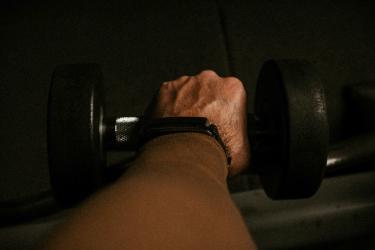
Creatine for Midlife Women Supports Brain and Muscle

Your body changes in midlife - muscle loss accelerates. Brain fog creeps in. And the supplement aisle offers a thousand promises with questionable science behind most of them.
Creatine isn’t one of those questionable supplements. It’s been studied for decades-mostly in young male athletes, sure. But the research on women, particularly those in perimenopause and menopause, is finally catching up. And the findings are worth your attention.
What Creatine Actually Does in Your Body
Creatine is a compound your body makes naturally from amino acids. It’s stored primarily in muscle tissue, with smaller amounts in your brain. Its job? Helping regenerate ATP, the energy currency your cells run on.
Think of ATP like cash on hand. When you need quick energy-lifting something heavy, sprinting, doing mental math-your body spends ATP fast. Creatine helps you reload that cash faster between efforts.
Here’s what shifts at midlife: your natural creatine production decreases. Estrogen decline affects creatine synthesis. Muscle mass drops 3-8% per decade after 30, accelerating after menopause. Your brain’s energy demands don’t decrease, but your ability to meet them does.
Why Midlife Women Specifically Benefit
The research on creatine and postmenopausal women shows measurable improvements in two critical areas.
**Muscle preservation and strength. ** A 2021 study in Experimental Gerontology found that postmenopausal women taking creatine alongside resistance training gained significantly more lean mass and strength compared to training alone. The dosage was 5 grams daily-nothing extreme.
Another study tracked women over 52 weeks. Those supplementing with creatine maintained bone mineral density better than the placebo group. This matters because fracture risk climbs sharply after menopause.
**Cognitive function. ** Your brain uses about 20% of your body’s energy despite being roughly 2% of your weight. Creatine crosses the blood-brain barrier and supports energy production in neurons.
Research published in Psychopharmacology showed that creatine supplementation improved memory and processing speed in vegetarians (who have lower baseline creatine levels). Studies on sleep-deprived subjects showed similar cognitive benefits. While menopause-specific brain research is still emerging, the mechanism-better cellular energy availability-applies across demographics.
Step 1: Choose the Right Form
Creatine monohydrate is what you want. Period.
Fancier versions exist-creatine ethyl ester, buffered creatine, creatine hydrochloride. Marketing teams love them. Your body doesn’t process them any better. Some actually perform worse.
Creatine monohydrate has:
- The most research behind it (hundreds of studies)
- The highest absorption rate when taken correctly
- The lowest cost per serving
Look for products with “Creapure” on the label. It’s a trademarked form manufactured in Germany with verified purity. Generic monohydrate works fine too, but Creapure gives you quality assurance.
Avoid products with added sugars, artificial colors, or proprietary blends that hide the actual creatine amount. You want one ingredient on the label.
Step 2: Determine Your Dosage
The standard recommendation: 3-5 grams daily.
Body weight factors in. If you’re under 140 pounds, 3 grams is plenty. Over 160 pounds, 5 grams makes sense. Between those - split the difference.
**Should you load? ** Loading means taking 20 grams daily (split into 4 doses) for 5-7 days to saturate muscles faster. It works. It’s also unnecessary for most people. Your muscles will reach saturation within 3-4 weeks at the standard dose regardless.
Loading can cause digestive discomfort-bloating, cramping, loose stools. If you’re sensitive or just prefer gradual changes, skip it.
**Timing doesn’t matter much. ** Some research suggests post-workout is slightly better for muscle uptake. The difference is marginal - consistency beats timing. Take it when you’ll remember to take it.
Step 3: Pair It With What Makes It Work
Creatine isn’t magic. It enhances results from things you’re already doing-or should be doing.
**Resistance training is non-negotiable. ** Creatine helps you work harder and recover faster from strength training. Without the training stimulus, you’re just expensive urine.
Aim for 2-3 sessions weekly hitting major muscle groups. Compound movements-squats, deadlifts, rows, presses-give you the most return on time invested. If you’re new to weights, even bodyweight exercises or resistance bands trigger adaptations creatine can support.
**Protein intake needs to be adequate. ** Most women undereat protein, especially at midlife. Shoot for 0. 7-1 gram per pound of body weight daily. That’s 105-150 grams for a 150-pound woman.
Yes, it sounds like a lot. Yes, it requires planning. Prioritize protein at every meal rather than trying to cram it all in at dinner.
**Hydration matters more than usual. ** Creatine pulls water into muscle cells. This is actually beneficial-it creates a more anabolic environment. But it means you need adequate fluid intake. Drink when thirsty and then some. Monitor your urine color; pale yellow is the target.
Step 4: Track and Adjust
Give creatine 4-6 weeks before evaluating results. Muscle saturation takes time. Cognitive benefits may take longer to notice subjectively.
Measurable markers to track:
- Strength on key lifts (can you add reps or weight?)
- Recovery time between sessions
- Energy during afternoon slumps
- Workout capacity (same effort feels easier, or you can do more)
Subjective markers:
- Mental clarity during demanding tasks
- Mood stability
- Sleep quality (some women report improvement)
Weight may increase 2-4 pounds initially from water retention in muscles. This is not fat. It’s actually a sign the creatine is working. Your muscles may look slightly fuller.
Common Concerns Addressed
“Will it make me bulky - “ No. Building significant muscle mass requires years of progressive overload, caloric surplus, and testosterone levels women don’t have. Creatine helps you build some lean tissue and preserve what you have. That’s it.
“Is it safe long-term? “ The International Society of Sports Nutrition reviewed the evidence and concluded creatine is safe for long-term use. Studies spanning 4+ years show no adverse effects on kidney or liver function in healthy individuals.
If you have existing kidney disease, talk to your doctor first. Otherwise, concerns about kidney damage are unsupported by evidence.
“Will it interact with my medications? “ Creatine has no known significant drug interactions. Still, mention it to your healthcare provider along with everything else you take.
“What if I stop taking it? “ Your creatine stores gradually return to baseline over several weeks. You won’t lose muscle overnight, but you may notice decreased workout capacity once depletion occurs.
What to Expect Realistically
Creatine won’t reverse aging. It won’t replace hormone therapy if you need it. It won’t compensate for poor sleep, chronic stress, or a sedentary lifestyle.
But for a supplement with minimal downside, strong safety data, and genuine mechanisms of action, creatine offers real value. You might notice:
- An extra rep or two on your lifts within weeks
- Less post-workout fatigue
- Better mental stamina during long work days
- Preserved muscle mass that would otherwise decline
These aren’t dramatic transformations. They’re incremental advantages that compound over months and years. In midlife, maintaining function matters as much as gaining it.
Start simple - buy quality monohydrate. Take 3-5 grams daily - train consistently. Eat enough protein - give it two months. Then decide if the benefits match the small investment of effort and money.
The research suggests they will.