Zone Zero Training: Gentle Recovery That Maximizes Gains
You finished your workout yesterday. Legs are sore, motivation’s low, and the couch looks incredibly inviting. Most people either push through another hard session or skip training entirely.
Both approaches leave gains on the table.
Zone Zero training sits between these extremes. It’s structured recovery work that accelerates adaptation without adding stress. Think of it as active rest with purpose-gentle enough to promote healing, intentional enough to reinforce movement patterns.
What Zone Zero Actually Means
Heart rate zones typically range from Zone 1 (light effort) through Zone 5 (maximum intensity). Zone Zero exists below all of them. Your heart rate stays under 50% of maximum. You shouldn’t break a sweat - breathing remains completely conversational.
At this intensity, several recovery mechanisms kick in:
- Blood flow increases to damaged tissues without creating additional micro-tears
- The parasympathetic nervous system activates, reducing cortisol levels
- Lymphatic circulation improves, clearing metabolic waste faster
- Movement lubricates joints with synovial fluid
Research from the Journal of Strength and Conditioning found that athletes using active recovery protocols returned to peak performance 23% faster than those using passive rest alone. The key was keeping effort genuinely low-many participants initially worked too hard and delayed their recovery instead.
Building Your Zone Zero Session
A complete recovery workout runs 20-40 minutes. Shorter sessions work when you’re crunched for time. Longer ones help after particularly brutal training weeks.
Step 1: Start With Diaphragmatic Breathing (3-5 Minutes)
Lie on your back. Place one hand on your chest, one on your belly. Breathe so only the belly hand moves. Inhale for 4 counts, hold for 2, exhale for 6.
This immediately shifts your nervous system toward recovery mode. Skip this step and your body might interpret the upcoming movement as another stressor.
Step 2: Joint Circles and Mobility Work (5-8 Minutes)
Work through every major joint systematically:
- Neck circles-10 each direction, slow and controlled
- Shoulder circles-forward and backward, then arm swings across body
- Wrist rotations-especially important if you lift or type frequently
- Hip circles-stand on one leg, draw large circles with the other knee
The goal isn’t stretching or strength. You’re simply reminding each joint of its full range of motion. Move slowly enough that you notice any sticky spots or restrictions.
Step 3: Gentle Movement Flow (8-15 Minutes)
Choose activities that keep you moving without improving heart rate:
Walking remains the gold standard. A 10-minute walk at an easy pace increases blood flow throughout the body. Walk outdoors if possible-natural light exposure supports circadian rhythm and sleep quality.
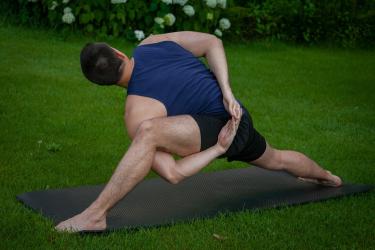
Yoga sequences work well when selected appropriately. Avoid power yoga or challenging holds. Focus on cat-cow, child’s pose, supine twists, and gentle forward folds. Hold each position for 5-8 breaths.
Swimming or water walking provides resistance without impact. The hydrostatic pressure of water also reduces inflammation. Even 10 minutes in a pool accelerates recovery noticeably.
Foam rolling falls into Zone Zero when done correctly. Roll slowly-about one inch per second-over major muscle groups. Stop on tender spots and breathe through the discomfort rather than grinding aggressively.
Step 4: Targeted Stretching (5-10 Minutes)
Now that tissues are warm and pliable, stretching becomes more effective. Hold each stretch 30-60 seconds.
- After leg day: hip flexors, hamstrings, quadriceps, calves
- After upper body work: chest doorway stretch, lat stretch, triceps overhead
- After back-focused training: figure-four glute stretch, thoracic extensions
Static stretching before intense exercise might reduce power output. After exercise or during recovery days? It improves flexibility without downsides.
Step 5: Parasympathetic Activation (3-5 Minutes)
End with deliberate relaxation. Lie flat, close your eyes, and perform a body scan. Start at your feet and mentally relax each muscle group moving upward. Finish with another round of diaphragmatic breathing.
This intentional wind-down signals your body that the session served recovery purposes, not training stress.
Timing Zone Zero Within Your Week
Placement matters more than most people realize.
The day after hard training offers the highest return. Muscles are damaged and inflamed. Zone Zero work accelerates the repair process without adding to the damage.
Between two intense sessions helps if you train the same muscle groups twice weekly. A Zone Zero session on Wednesday between Monday and Friday squat days often allows heavier Friday loads.
During deload weeks, Zone Zero replaces your normal training volume. You’re maintaining movement patterns and blood flow while allowing accumulated fatigue to clear.
One common mistake: treating recovery days as opportunities to “sneak in” extra work. Adding resistance, increasing pace, or extending duration defeats the purpose. If you finish a Zone Zero session tired, you went too hard.
Sleep: The Recovery Multiplier
Zone Zero training during waking hours only captures part of the recovery equation. Sleep handles the rest-literally.
During deep sleep, growth hormone release peaks. This hormone drives muscle protein synthesis, tissue repair, and fat metabolism. Reduce sleep quality and you reduce gains, regardless of how perfectly you train or eat.
Practical sleep optimization:
**Temperature matters more than duration. ** A bedroom at 65-68°F (18-20°C) allows body temperature to drop appropriately, triggering sleep hormones. Too warm and you’ll wake repeatedly.
**Light exposure follows a schedule. ** Bright light in the morning sets circadian rhythm. Dim lights after sunset. Screen filters help but don’t fully solve blue light issues-consider amber glasses for evening use.
**Caffeine has a 6-hour half-life. ** That 3 PM coffee still has 25% of its caffeine in your system at 9 PM. Cut off caffeine by noon if sleep quality matters.
**Consistent timing beats duration. ** Sleeping 7 hours also each night produces better recovery than 8 hours at variable times. Your body prepares for sleep before you feel tired-but only if it can predict when sleep will happen.
Recognizing and Preventing Burnout
Zone Zero work serves as both treatment and early warning system for overtraining.
Burnout symptoms often appear gradually:
- Workouts that previously felt moderate now seem exhausting
- Sleep quality declines despite feeling tired
- Motivation disappears; the gym feels like a chore
- Minor injuries or nagging pains accumulate
- Mood becomes irritable or flat
If Zone Zero sessions feel difficult-if you can’t keep heart rate low during gentle movement-you’re likely overtrained. Your nervous system is so revved up that even easy work triggers a stress response.
The fix involves more Zone Zero work, not less. Spend 1-2 weeks with only recovery training. Sleep becomes the priority. Training volume drops to near zero. This feels counterproductive, but it’s the fastest path back to productive training.
Prevention works better than treatment. Schedule Zone Zero sessions before burnout appears. One or two weekly recovery sessions maintain sustainable training intensity across months and years.
Putting It Together
Here’s a sample week balancing intensity with recovery:
- Monday: Strength training (Zone 4-5 effort)
- Tuesday: Zone Zero recovery session, 30 minutes
- Wednesday: Moderate cardio (Zone 2-3 effort)
- Thursday: Strength training (Zone 4-5 effort)
- Friday: Zone Zero recovery session, 25 minutes
- Saturday: Active hobby-hiking, sports, yard work (variable zones)
- Sunday: Complete rest or optional Zone Zero
This structure allows two hard sessions weekly while providing adequate recovery. Adjust based on your response. Some people need more recovery work; others thrive with three intense days.
Track how you feel, not just what you accomplish. Energy levels, sleep quality, and motivation tell you more about recovery status than any fitness tracker.
The athletes making steady progress year after year have figured this out. They train hard when they train. And they recover deliberately when they rest. Zone Zero bridges the gap, turning passive downtime into active adaptation.